A 2025 efficacy study involving six Australian primary and secondary schools investigated the impact of StepsWeb on students' literacy development over 20 teaching weeks.
The study was undertaken in partnership with the Australian EdTech Innovation Network (EIN), facilitated by EduGrowth, and guided by researchers from the Monash University Hub for Educational Design and Innovation (HEDI).


The purpose of the study was to:
Throughout the study, schools were supported with guidance on implementation to ensure consistency across settings. Students worked independently through personalised learning pathways within StepsWeb, completing regular activities aligned to their individual level of need.
StepsWeb provided supporting resources, such as workbooks and hands-on gamesets for students who were identified as being tier 3 and 4 learners in the pre-assessment. Teachers were able to monitor progress using built-in assessment and reporting tools, while providing additional support where required.
A combination of StepsWeb assessments and established literacy measures was used to evaluate student progress over time, allowing researchers to compare growth across multiple areas of literacy development.
Supporting students with diverse literacy needs is an ongoing challenge in mainstream classrooms. While some students are working at or above age expectations, others may be several years behind in foundational literacy skills. These differences become particularly challenging in upper-primary and secondary schools, where increasing curriculum demands require stronger reading fluency, comprehension and vocabulary skills.
Teachers must balance the need for targeted literacy intervention with opportunities to extend more capable learners, often within the same classroom and with limited time and resources.
This study aimed to investigate literacy outcomes associated with StepsWeb use across six Australian schools over 20 teaching weeks. It examined students' progress in spelling, visual word recognition, reading fluency, and comprehension, including whether outcomes differed according to their initial level of literacy need.
The research also explored how StepsWeb was implemented in everyday classroom settings, examining teacher experiences, student engagement, and the role of professional learning and implementation consistency in supporting positive outcomes.
Participating schools and students
Five primary schools and one secondary school in Victoria and New South Wales participated, with 517 students aged between 8-14 years old. The study included learners across different levels of literacy need. The schools were:
Read the full report for more details on how these schools were recruited and the process that followed.
Program implementation
Students were allocated to one of the Multi-Tiered System of Supports (MTSS) tiers recommended by StepsWeb and received support based on their level of need. For more information on what level of need constitutes the various tiers, see page 13 of the report.
Students worked through StepsWeb's structured online literacy Course for 20 teaching weeks, with weekly activity targets based on their needs. Following StepsWeb's recommendations, students who were identified as Tier 2 or Tier 3 learners used the online Course alongside supplementary StepsWeb workbooks. Participating schools received training and access to supplementary teaching resources. Training consisted of online webinars, on-site training, and StepsWeb's online training videos.
Measuring process
Pre- and post-testing used StepsWeb's Spelling Placement Test and Visual Recognition assessments alongside DIBELS Oral Reading Fluency and Maze assessments, which are measures independent of StepsWeb. They measured the following:
See pages 8-12 for more information on these assessment measures and how they were administered.
StepsWeb designed and administered the study, with specialist research support from Monash HEDI through the Australian EdTech Innovation Network.
Following 20 weeks of StepsWeb implementation, students demonstrated improvements across all four areas of literacy assessed: spelling, visual word recognition speed, oral reading fluency and reading comprehension.
Finding 1: Accelerated progress in spelling
Students achieved an average Spelling Age gain of 11 months over the six-month study period, exceeding the six months of progress typically expected over this timeframe. All six participating schools recorded average gains above this benchmark.
The strongest improvements were observed among students requiring additional literacy support:
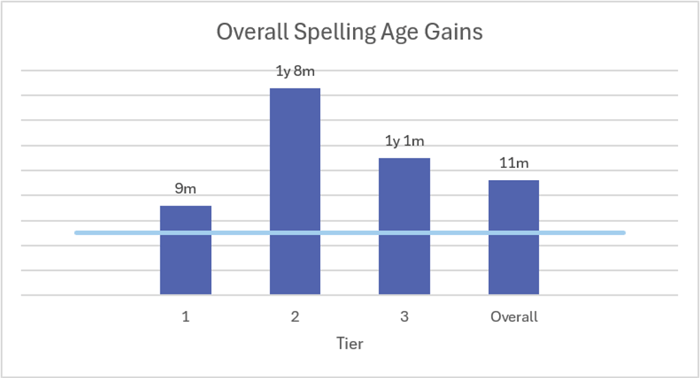
The particularly strong progress among Tier 2 students suggests that targeted literacy reinforcement may help learners with moderate literacy difficulties to begin closing the gap between their literacy achievement and chronological age.
Finding 2: Substantial improvements in visual word recognition
Students demonstrated considerable improvements in the speed at which they recognised familiar written words, an important component of developing automatic and fluent reading.
At the beginning of the study, just 14% of students achieved visual recognition speeds within the average or above-average range for their age. By the final assessment, this had increased to 67%.
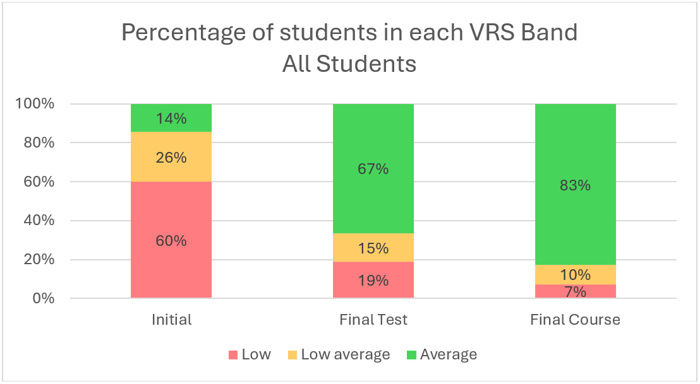
Results recorded during regular StepsWeb learning activities showed further improvements, with 83% of students achieving speeds within the average or above-average range while working through their Course.
These findings suggest that students developed greater automaticity in recognising written words, reducing their reliance on conscious decoding processes and supporting the development of reading fluency.
Learn more about the StepsWeb Visual Recognition test.
Finding 3: Improved oral reading fluency
Improvements in reading fluency were also recorded through the DIBELS Oral Reading Fluency (ORF) assessment, an independent measure of reading accuracy and fluency.
The proportion of students classified as requiring Intensive Support decreased from 32% at the beginning of the study to 13% following 20 weeks.
At the same time, the proportion of students achieving the Core Support band increased, indicating that more students were demonstrating reading fluency skills consistent with stronger reading proficiency.
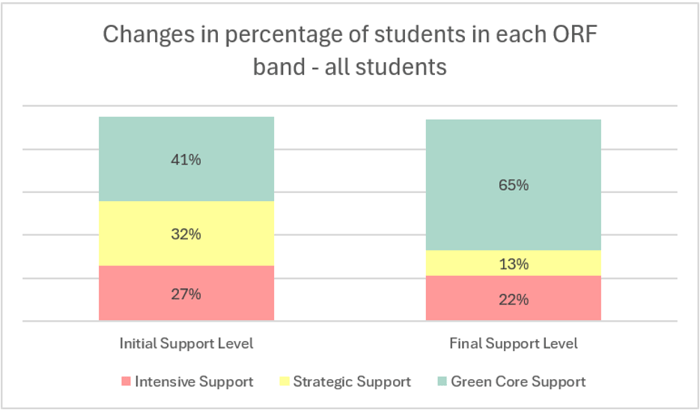
These results suggest that improvements extended beyond the spelling and word-recognition skills assessed within StepsWeb, with many students demonstrating stronger oral reading fluency and reduced levels of assessed intervention need.
Finding 4: Gains in reading comprehension
Students also demonstrated improvements in reading comprehension, as measured by the independent DIBELS Maze assessment.
The proportion of students achieving the highest performance band (Blue Core Support) increased from 35% to 60% over the study period.
Meanwhile, the combined proportion of students requiring Strategic or Intensive Support decreased from 26% to 17%.
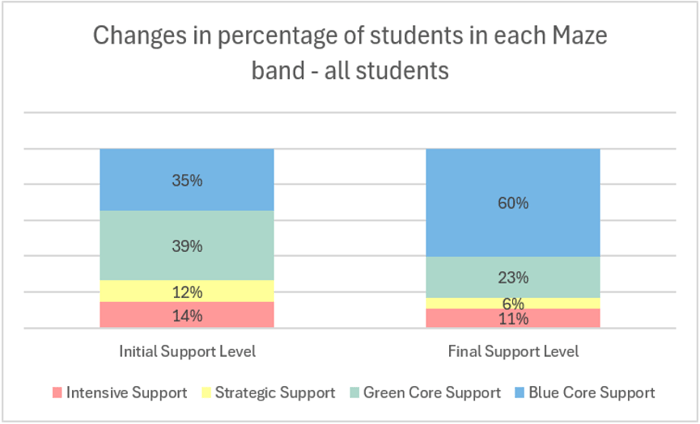
These findings indicate that more students were meeting or exceeding expected levels of reading comprehension following the intervention period.
As reading comprehension is essential for accessing and understanding curriculum content across subjects, these improvements have important implications for students' broader learning and classroom participation.
The importance of consistent engagement and teacher involvement
Alongside measuring literacy progress, the study examined how student engagement, teacher involvement and program implementation influenced outcomes across the six participating schools.
The findings highlighted the importance of consistent use of StepsWeb and active teacher support in achieving stronger literacy gains.
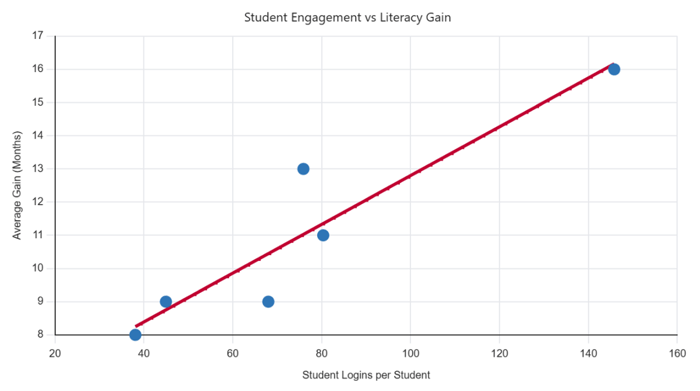
Greater engagement was associated with stronger literacy gains
Schools with higher levels of student engagement generally recorded greater improvements in literacy. The research identified a positive correlation between student engagement and literacy growth (r = 0.93), indicating that schools that had higher student engagement with StepsWeb tended to achieve stronger results.
Teacher engagement was also positively associated with student progress, with a correlation of r = 0.70 between teacher logins per student and average literacy gains.
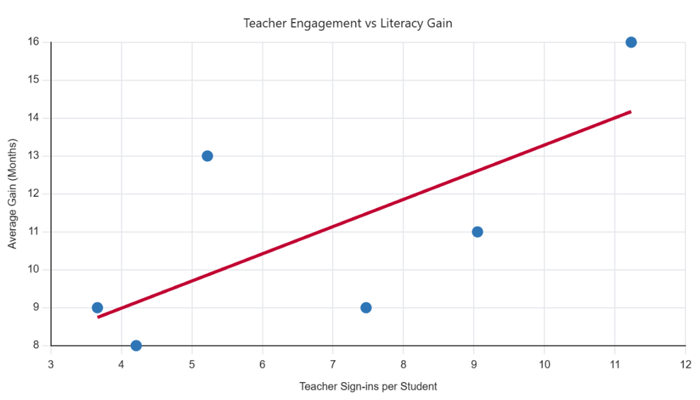
Tongala Primary School, which recorded the highest levels of student engagement and teacher involvement, also achieved the strongest average spelling progress of the six schools.
These findings highlight the importance of consistent program use, alongside active teacher involvement in monitoring progress and supporting students' learning.
Effective implementation requires more than technology
The study identified differences in how schools implemented StepsWeb, particularly in their use of professional learning opportunities, supplementary workbooks and hands-on teaching resources.
Although participating schools were offered training and ongoing support, engagement with these opportunities varied. Time constraints and competing classroom priorities also meant that recommended supplementary teaching resources were not always used consistently.
These challenges were particularly relevant for students requiring intensive literacy intervention, who benefit from additional explicit teaching and guided practice alongside online learning.
Despite these variations, all six schools achieved average spelling gains above the six-month benchmark.
The findings reinforce the importance of combining technology with effective teaching practices, consistent student participation and appropriate professional support. They also highlight opportunities to strengthen teacher onboarding, school communication and implementation guidance to support more consistent outcomes.
Alongside the measurable improvements in literacy, the study explored teachers' experiences of using StepsWeb in their classrooms. Feedback was collected from all six participating schools, providing insight into student engagement, classroom learning and the practical benefits of the program.
Overall, teacher feedback was positive, with educators reporting improvements in student confidence, motivation and independence, alongside benefits for their own teaching practices
“It has been cleverly created with a teacher and speech lens, not just an entertainment lens. We have seen real gains.”
- Jaclyn Elborough, Year 3/4 Teacher, Tongala Primary School
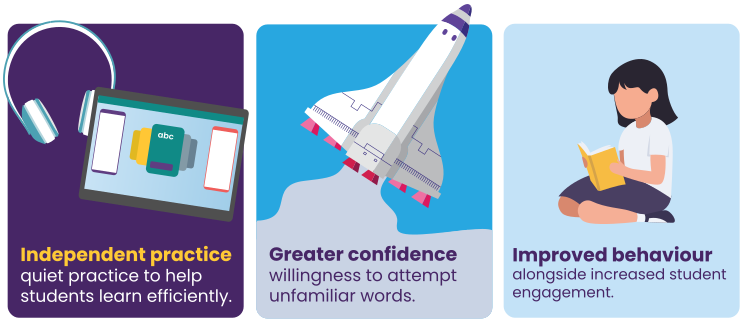
Improved student motivation, confidence, and behaviour
Several schools reported positive changes in students' attitudes towards learning. Teachers observed increased motivation, confidence and engagement, with students often looking forward to their StepsWeb sessions.
Some teachers reported improvements in classroom behaviour and self-regulation. One school described StepsWeb as a "game-changer" for student behaviour and engagement, while another valued it as a quiet, independent activity that helped students settle into learning.
“With iPads, headphones, and individualised activities, assessments, and games, it reduced some of the behavioural problems, increased engagement, supported the much-needed phonetic practice, with a combination of listening, spelling, comprehension, and targeted activities."
- Jaclyn Elborough, Year 3/4 Teacher, Tongala Primary School
Applying literacy skills beyond StepsWeb
Teachers observed students transferring their developing literacy skills into other areas of classroom learning.
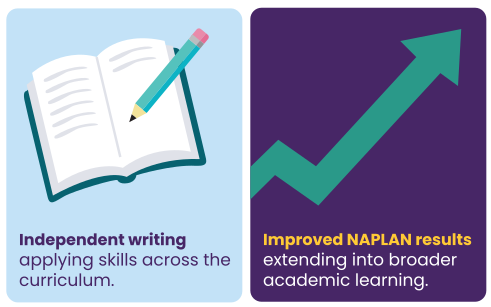
One school reported that students were applying newly acquired vocabulary and spelling knowledge to their written work, producing a greater volume of writing, and demonstrating a deeper understanding of the texts they were reading.
Another school believed StepsWeb had contributed to improvements in its writing program and NAPLAN results, suggesting that the benefits of stronger foundational literacy skills may extend into broader academic learning.
"We have seen strong improvement in the overall literacy outcomes for several students who used the program consistently. Their reading fluency rate and confidence has improved, they are transferring their increased vocabulary and spelling skills into their writing work, and are writing an increased amount as a result. Their verbal responses in text discussions show a more considered and deeper understanding of what they have read."
-Kelly F., Assistant Principal Curriculum and Instruction, Murrumbateman Public School
Reducing teacher workload and supporting targeted instruction
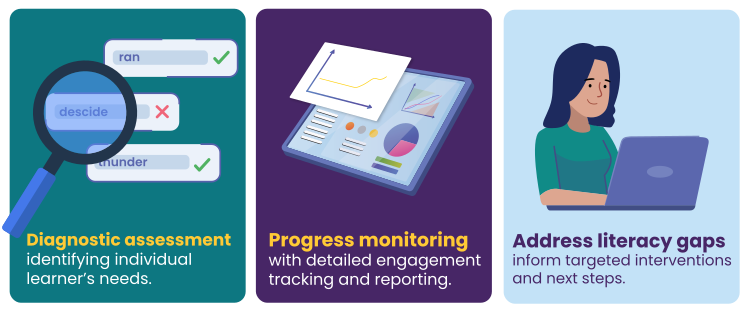
Teachers highlighted the practical benefits of StepsWeb's diagnostic assessments, automated marking and progress-monitoring tools. These features helped educators identify individual learning needs, monitor student progress and provide more targeted support, while reducing some of the administrative demands associated with literacy instruction.
Feedback from participating schools reinforced the value of combining structured, individualised learning activities with accessible assessment information to support teaching decisions.
"StepsWeb has definitely reduced my workload. It is fantastic peace of mind to know that students are working at their own point of need as soon as they log on to the program."
- Jamieson Y., Classroom Teacher, Tongala Primary School
For more details about teacher feedback and how it was collected, see pages 24-26 of the report.
Research Limitations and Lessons Learned
While the study demonstrated encouraging literacy gains across all six participating schools, limitations and implementation challenges should be considered when interpreting the findings. These challenges provided valuable insights into how StepsWeb can better support schools in achieving consistent outcomes.
Research limitations
The study did not include a control group, meaning that improvements in literacy cannot be attributed solely to StepsWeb. Although average spelling gains exceeded the progress typically expected over the six-month period, some improvement would also be anticipated through regular classroom instruction.
Implementation also varied between schools, particularly in teacher training, student participation and the use of supplementary teaching resources. These differences may have influenced the outcomes achieved across participating schools.
Additionally, schools used different DIBELS assessment passages, limiting direct comparisons of raw reading scores. Some students were also unable to complete post-testing due to absences towards the end of the school year, resulting in incomplete assessment data.
The study duration was just 5 months, and over that time teachers and students were still learning how to use the program effectively. This may have impacted student outcomes, particularly in the early stages, as challenges were identified and overcome.
A longer or extended study would be necessary to fully understand StepsWeb's potential impact, however, this study reflects what a school that is completely new to StepsWeb can achieve in the first 5 months of using the program.
Lessons for future implementation
Important lessons include the value of effective teacher onboarding, clear communication and consistent use of the program. Although training and support were offered throughout the study, participation varied between schools. Supplementary workbooks and hands-on teaching resources were also used inconsistently, particularly for students requiring more intensive literacy intervention.
The findings have informed improvements to StepsWeb's onboarding and communication processes, with greater emphasis on supporting school leaders, encouraging teacher professional learning, and monitoring implementation.
Overall, the study provides encouraging evidence of literacy improvement in authentic classroom settings, while highlighting opportunities to strengthen program implementation, and areas for further research.
These experiences highlight the importance of ensuring that teachers understand how to integrate StepsWeb into their existing literacy programs and make effective use of the available teaching resources.
How teacher feedback informed development
Each participating school brought different experiences and perspectives to the study, providing valuable feedback on how StepsWeb could better support their students and teachers.
This feedback was shared with the StepsWeb development team and has helped shape ongoing improvements to the program, including:
These developments reflect the value of incorporating educators' real-world experiences into the ongoing improvement of StepsWeb.
Encouraging evidence of literacy support
The 2025 efficacy study provides encouraging evidence that StepsWeb can support meaningful literacy development across a diverse range of learners in mainstream primary and secondary school settings.
Over 20 teaching weeks, students across all six participating schools demonstrated improvements in spelling, visual word recognition speed, oral reading fluency and reading comprehension. Average spelling gains exceeded the progress typically expected over the study period with 11 months gain, while independent DIBELS assessments provided further evidence of improvements in reading proficiency.
The research also highlighted the importance of consistent student engagement, active teacher involvement and effective implementation. While outcomes varied between schools, the findings demonstrated positive literacy growth across different classroom environments and levels of literacy need.
Beyond the measurable results, the study provided valuable insights into teacher experiences, implementation challenges and opportunities to strengthen professional learning and support.
Although further research, including studies with comparison groups, would help establish the extent of StepsWeb's impact, these findings provide a promising foundation for supporting literacy development through a combination of structured technology, targeted instruction and effective teaching practices.
For more in-depth analysis, read the full report.