Changing lives by improving literacy
Literacy is a fundamental building block and the key to success in both education and work life.
Poor literacy skills are likely to stop people from achieving their full potential and can have a devastating effect on self-confidence. By helping people improve their literacy skills, you are truly changing their lives.
We also believe that, as educators, we need to move away from ‘fix them when they’re broke’. In other words, we need to stop waiting for children to fail and then focussing on intervention. Our materials are designed to enable every learner to progress at their own speed and level, with the right amount of reinforcement and specialist activities to stop dyslexic learners falling through the cracks, but also enable advanced learners to move ahead at their own pace.
To produce an effective research-based literacy tool that really works.
To be accessible to as many people as possible, including families, without training.
To tailor fit the needs of each individual learner, so no child falls through the cracks.
The ability to be implemented in the classroom or at home.
StepsWeb Founder
Ros started her working life as a translator doing technical translations for an engineering company in Germany. Later on, she became a modern languages teacher in the UK, teaching German, French, and Spanish.
After her eldest son began struggling with reading in school, Ros pushed for him to have an educational assessment which identified he was dyslexic, Ros was intrigued about what made it harder for some children to acquire literacy skills. She did further psychology training and then did the OCR Diploma in Specific Learning Disabilities, which is a Masters Level qualification in specialist teaching and assessment.
Since then, Ros has done over 3,000 full educational/cognitive assessments, worked as a tutor for learners with severe needs, and went on to develop The Learning Staircase, including educational resources and StepsWeb, the online program.
From hands-on gamesets to a leading online literacy program, we’ve been changing lives by improving literacy for over 25 years.
When Ros’s eldest son, David, was aged seven, he was identified as a high functioning dyslexic. Ros, who already had experience as a teacher, was intrigued about what made it harder for some children to acquire literacy skills. She underwent further education, completing a Masters level qualification in specialist teaching and assessment.
Frustrated with the lack of good resources, particularly for older learners with very low literacy skills, Ros created a range of hands-on games, activity resources, and educational assessments to support and identify learners with severe needs.
Ros’s son, David, had grown to become a talented software developer. Together, Ros and David created Steps Network, a literacy teaching software which focused on effective research-based approaches, rather than ‘edutainment’.
To cope with increasing demand for educational assessments and tuition, Ros opened the Step by Step Centre. It grows to have 10 staff and 130 students.
The Christchurch earthquake forces the closure of the Step by Step Centre. However, this enabled us to focus on the software program.
Following a boost of recognition after receiving the Mainpower Supreme Award in 2014, we created StepsWeb - the online version of Steps Network with the help of a grant from Callaghan Innovation.
In collaboration with the University of Auckland, our research in visual recognition speed, and its use to predict future ability to learn literacy, is published. This world-first test can be administered through the StepsWeb online program.
During the COVID-19 lockdowns, we realised that schools were struggling with all the challenges of remote learning. We decided the best way we could help was by providing free additional licences for the lockdown, and a period afterwards. Over 50,000 were taken up in each major lockdown, and we were pleased to be able to help during that difficult time.
Ros presents at the World Literacy Summit at Oxford University, sharing her research into literacy development and visual recognition speed with educators across the United Kingdom.
A two-term independent study was conducted by New Zealand Ministry of Education staff in six primary schools in West Auckland. The study set out to assess the impact of structured literacy approaches on literacy outcomes for whole year-groups, and found students made an average of 14 months literacy gain after 6 months of consistent StepsWeb use.
StepsWeb joined forces with Pearson Australia to provide localised high-quality support for educators in Brisbane, Perth, or anywhere in between. We also conducted a study in collaboration with EduGrowth, Monash University, and six Australian schools to assess the program’s effectiveness in real Australian classrooms.
StepsWeb has changed lives by improving literacy for over 400,000 students, and is starting to be used extensively abroad, particularly Australia, Singapore, and UK.
In 2026, StepsWeb was listed on the Learning Cabinet, a UNICEF-led initiative to curate evidence-backed EdTech solutions which are capable of addressing the global learning crisis.
We are continually adding to StepsWeb, making improvements, and listening to evolving literacy teaching needs to make it the most effective literacy teaching device possible.
Ensuring the program doesn't just work, but thrives is important to us. Whether that's through providing high-quality educational and technical support, environmentally sustainable practices, or giving back to the community where we can.
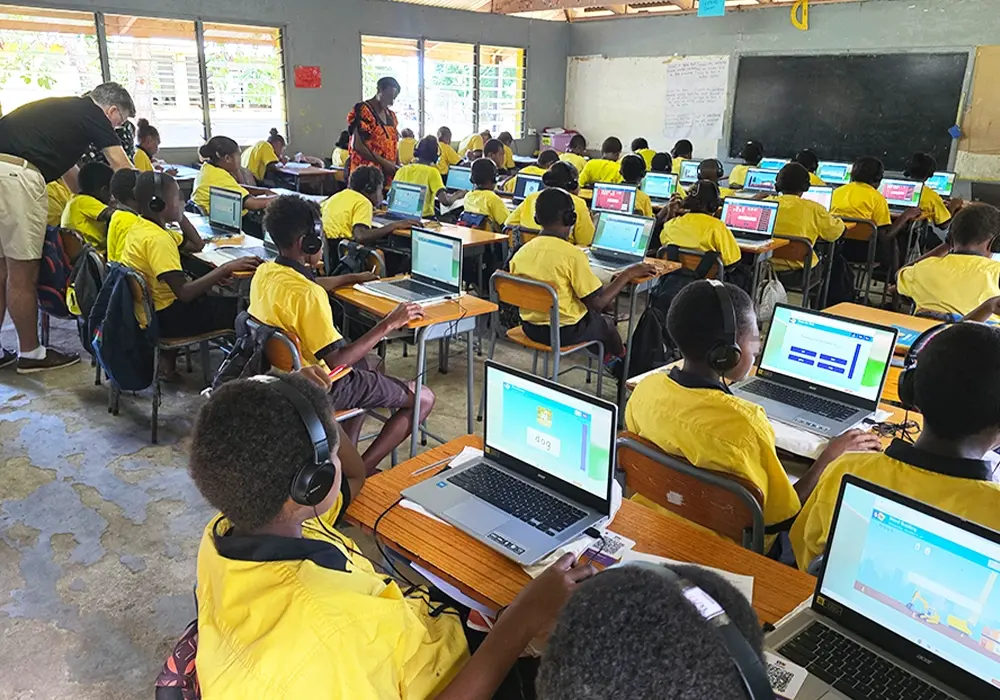
Alongside providing free student logins to schools in the Pacific Islands, we have contributed to a number of projects which focused on improving literacy skills for learners.
StepsWeb provided software, workbooks, and training to three secondary schools in Port Vila. This project was coordinated by Cognition Education with support from the Ministry of Education & Training, Vanuatu and funded by New Zealand Ministry of Foreign Affairs and Trade.
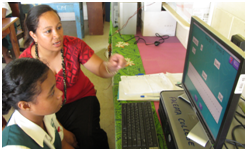
Steps was introduced into a pilot literacy project across four schools in Samoa (two primary-intermediate and two high schools) in partnership with the Samoan Ministry of Education, Sports and Culture (MESC). The project was led by Paul Henriques, Director of Dyslexia Aid and Pacific Islands Steps Trainer in an effort to improve literacy outcomes for students in Samoa.
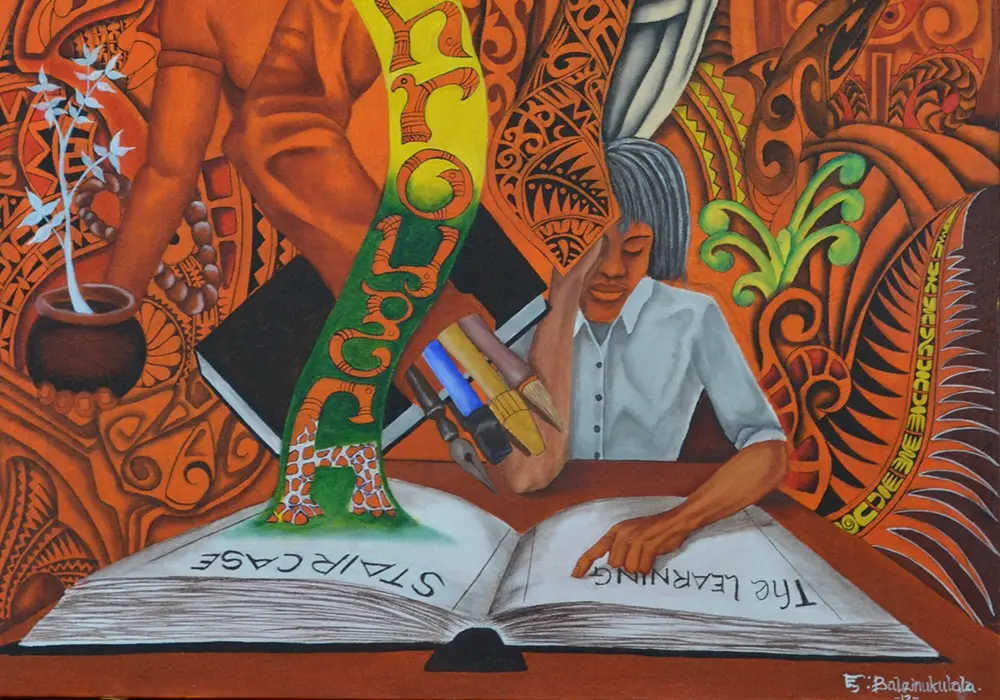
During a visit to Fiji, Steps, the forerunner of StepsWeb, was used to support English literacy development for long-term inmates at a local prison.
The program provided opportunities for adult learners from disadvantaged backgrounds to improve their literacy skills and job prospects for life after release. A painting created by one participant now hangs in our Christchurch office as a lasting reminder of our mission - changing lives by improving literacy.